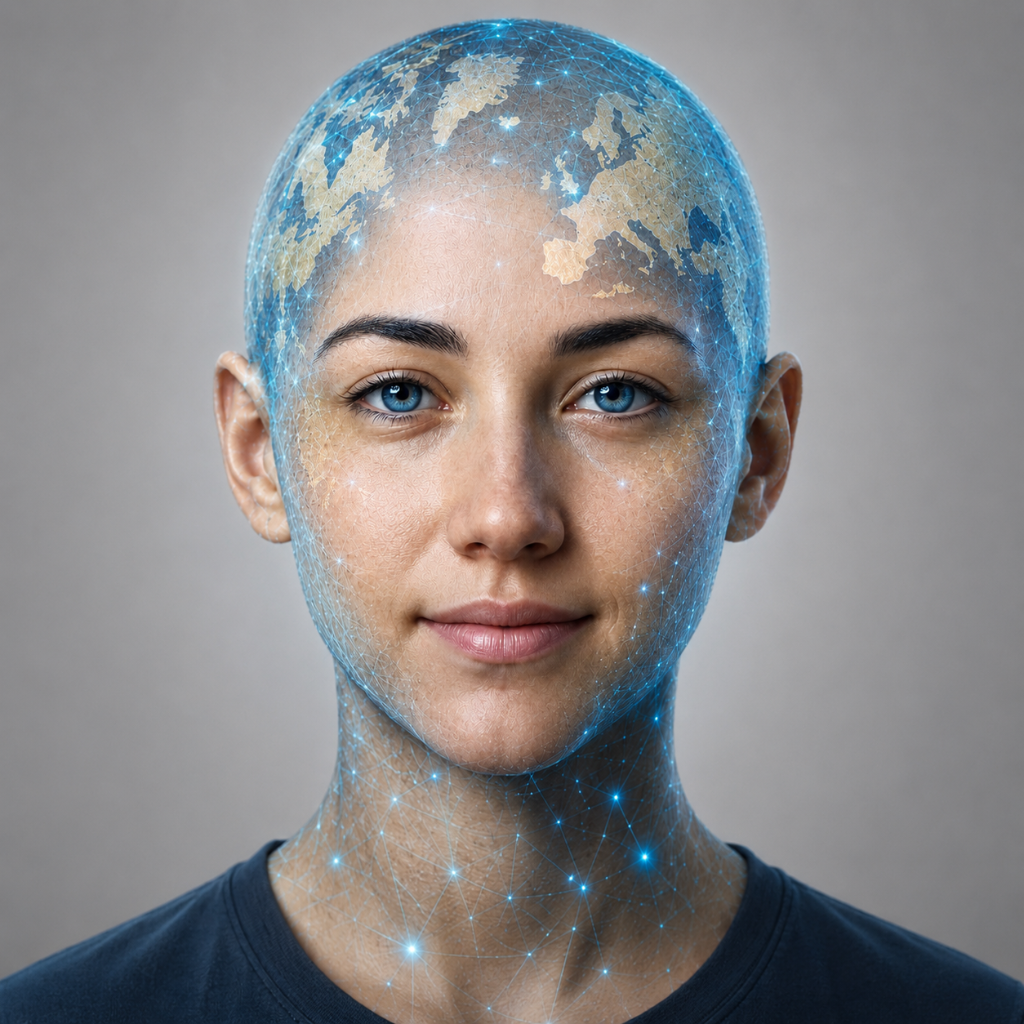
A bakery closes early in Lagos as floodwater slides across the floor. In Athens, a teacher sends her class home because the heat has pushed the city past the point where it is safe to sit still. In Recife, a nurse finishes her shift, opens her phone, and watches public trust in medicine dissolve under one more wave of lies.
Three cities, three different emergencies, one problem underneath them all. The coming decade will decide whether humanity learns to thrive or merely manages to endure. The distance between those two words is not small. It is, in the end, the whole of what is at stake.
Why these stories, and why now
What follows is a wager on thriving. Across fifteen stories — one for each domain of human life, from health to law, from education to culture, from business to the climate — we report back from 2035 on how the change actually happened.
Each is written as long-form reporting. The stories begin where change is felt — in rehearsal halls, clinics, council chambers and markets — and follow a single Project up through the system that made it possible. The aim is modest and difficult at once: to make something abstract concrete enough to picture, and then to build it. Read all fifteen and the wager comes into focus. UnitedPeoples (UP) is a civic operating system, built to change the trajectory of our shared future.
Who and what UP is
UnitedPeoples is a public-benefit foundation, registered in The Hague. It is not another NGO, and not a campaign. It is a civic operating system, designed to mobilise a hundred million members by 2035 — people who join UP, hold a THRIVE Plan (a personal roadmap for growth, accountability and peer support), and commit to helping one another succeed. The promise is plain: to do better and be better, while doing good.
Projects are the heart of it. They are the practical units of change — local or global, small or large — where members act together. Every Circle exists to author and deliver Projects; every member takes part through them. By 2035, UP expects to have catalysed some twelve million Projects, and to be starting close to six million more each year — a rate built to climb as the institution matures, not to level off.
At the centre is NAVi, UP's AI guide — an AI that acts, not merely answers. Built around UP's Tenets — the equal dignity of every person, the open society, collaboration, courage — NAVi keeps those commitments present at the point of action. It shortens the distance from idea to Project: mapping partners, surfacing methods that have worked elsewhere, drafting budgets, arranging feedback, keeping THRIVE Plans moving, connecting members across borders. Work that once took months of calls and favours can now happen in something close to real time. That is what lets millions of Projects run at once and still hold together — each aligned to a Mission, each held to the same principles.
UP's work is organised into fifteen GlobalCircles, each one UP in miniature, shaped to a single domain of human life. GlobalCircles set Missions — the large, directional commitments that anchor Projects and define what thriving looks like by 2035 — and steward the ThemedCircles and BrandedCircles where Projects are designed and scaled. Alongside them run LocalCircles: small, permanent peer groups in neighbourhoods everywhere, rooting Projects in community and connecting them back to the Missions above.
The scale is deliberate. By 2035, UP anticipates millions of Circles worldwide, driving millions of Projects, and directing trillions of dollars' worth of knowledge, talent and capital toward solutions that serve both people and planet. These are not vanity figures; they are what a system designed for scale produces once it is running — every member carrying a THRIVE Plan, every Circle obliged to deliver Projects, every Project quickened by NAVi, every action grounded in the Tenets. Anything less would fall short of what the moment demands, and would not work.
Behind that scale stands the Silent Giant: the large, pragmatic majority with little patience for orthodoxy or ideology. They are teachers, entrepreneurs, scientists, artists, executives and citizens in every culture and every sector, and between them they hold an enormous share of the world's knowledge, networks and capital. Organised through UP's Circles and Projects, that untapped capacity becomes usable — not for its own benefit alone, but for everyone's.
UP runs on a simple exchange: every member gives, and every member receives. If you run a research lab trying to understand shifts in the Gulf Stream and what they mean for coastal cities, UP and NAVi connect you to people working the problem on the ground. If you are a recycling start-up, this is where you meet investors who share your values. If you are a company ready to put resources behind the public good, this is where Projects are already waiting for your support — and where you gain partners and insight in return.
Every member, every Circle, every Project, connected by NAVi, grounded in the Tenets, growing together. That is how a decade becomes enough time to change things at global scale.
What comes next
On a chart, UP can look abstract — or frankly overwhelming. The way to understand it is to watch it work, which is what these stories are for. Each GlobalCircle is introduced by a correspondent reporting from 2035, showing how that part of life was remade: what it felt like, and how it actually functioned. We begin with Arts Culture & Entertainment, where culture did more than reflect the world — it helped rewire it, as stages became civic infrastructure, audiences became authors, and the Silent Giant's capital was first put to work as a force for systemic change. From there we move through health, education, law, sustainability, economics, science, politics and the rest, until every domain is in view — each showing how UP turned dormant potential into power that acts.
Piecemeal reform is not enough. The pressures bearing down on us — climate, inequality, the erosion of democracy — move too fast and run too deep for half-measures. That is why UnitedPeoples exists. Humanity's Plan B is a wager that thriving is not a utopia but something practical and measurable — and achievable, if we choose to build it together.