Not a concept-stage initiative.
The continuation of work that has already been done — ready to be brought into the world at the scale the moment demands.
A lifetime spent building the unbuilt.
UnitedPeoples begins with a conviction its founder, Bob Westrope, formed early: the institutions people rely on can fail them — and the answer is not to abandon institutions, but to build better ones, and when necessary new ones. He came to it honestly, in a working-class Canadian upbringing where the structures meant to look after people who showed up and did the work did not, in the end, hold. The lesson he drew was about agency: the structures worth trusting are the ones you help build.
He put himself through a degree in strategic studies while working as a correctional officer — the first of many times he backed his own conviction over the safe path. Early in his career that carried him to Director of Strategy at Southam Graphics Group — a division of Southam Inc., then Canada's largest print-media group. SGG was a $600-million operation of some 4,000 people in 1992. When the web arrived, he became one of three founding principals of KPMG Toronto's first e-commerce practice, helping build a discipline before most of the market knew it needed one.
From there came the defining venture of his middle years: CentrSource — a place, as he first put it to a room of chief executives in 1999, where consumers and advertisers could finally meet on equal terms. He pursued it for well over a decade, with a persistence that foretold the commitment he now brings to UnitedPeoples. It drew Canada Post as a partner and one of Central Europe's most successful entrepreneurs as a backer. It built a team of over a hundred, raised around €35 million, and by 2011 had a billion-dollar valuation in view. Then — months after he had recruited a chief executive built for that scale and stepped back to Chairman — it collapsed. He was fifty-five, and it was, in his own word, devastating. It was also the most teachable decade of his life. What it taught him about capital, timing, scale and the limits of any single founder is built into UnitedPeoples today.
He did not step off. He retrained as an executive coach and turned from commerce to civic life — to a contest he saw sharpening worldwide between open societies and the forces gathering against them. In April 2016, with a small group of co-founders, he brought twenty-five people together in Toronto to found the Leaders Expedition (LEx): a non-partisan, radically centrist experiment to find, connect and lift up values-aligned citizen leaders across borders and generations. Over four years LEx grew to roughly a thousand participants in more than thirty-five countries — a messy, volunteer-driven, largely self-funded proof that the appetite was real — run on a global HUB, on LocalCircles meeting in living rooms and cafés, and on a Charter that put common purpose above ideology.
LEx did not survive the pandemic. Westrope, who had funded it himself, closed it in June 2020 and preserved everything it had made. And it had made a great deal — the LocalCircle format, the peer-support model, the first HUB, the meeting rhythms, the Charter language: the early architecture of a civic operating system, later given to UnitedPeoples freely and with no claim kept back. UnitedPeoples is not a reboot of LEx but its reinvention — the same human idea, rebuilt with the governance, technology, finance and culture to hold at scale.
Through all of it the instinct never changed: a pull toward the thing that does not yet exist but should. UnitedPeoples is its fullest expression — an institution designed to be worthy of the trust people place in it, and built to outlast the people who start it.
Seated in the City of Peace and Justice.
Stichting UnitedPeoples was incorporated on 4 June 2024 and seated in The Hague — the city built around international law and institutions — with the founder moving there permanently that October to be on the ground through to D-Day. From 2024 through 2026, UnitedPeoples went through the most intensive design phase in its history: narrative, governance, financial model, operating system, culture and theory of change, all rebuilt to a founding standard.
Built to outgrow its builder.
A story this personal raises a fair question, and UnitedPeoples answers it in the structure itself. The mission lives in the Tenets, in the Articles of Association — the legal charter — in the UP Constitution, and in a term-limited board that appoints its own successors: not in any individual. The founder's double role as Chairman and Acting CEO is an explicit launch arrangement, to be separated as the institution matures. The nine-role executive team will be recruited through a carefully run global search to seat a diverse, globally representative executive team, and presented at D-Day — because the people who arrive first are unlikely to be the best the world can offer, and UnitedPeoples intends to recruit the best the world can offer. The founding team's task is the opposite of holding on: to design, fund and pre-build the institution that team will inherit.
"After three years and thirty thousand hours, I can tell you two things with certainty. This is harder than it looks. And it is possible."
R.J. (Bob) Westrope · Founder · Chair · Acting CEO
Assembled before the capital. On conviction.
The Launch Team are the people laying the foundation for UnitedPeoples — designing, funding and pre-building the institution, and recruiting the diverse, globally representative executive team that will inherit it, so its first ninety days are spent running an institution rather than starting one. It is deliberately not the executive team: a venture of this consequence is too important to be staffed by whoever happens to be in the room at launch. The board — Westrope, Janzen, Bosman — serves through the foundation under Dutch ANBI law, unpaid. Like the launch team itself, it is a founding placeholder, to be rebuilt after funding as a Supervisory Board recruited to match the need. For the operators, advisors and host-elects, commitments are at this stage verbal — statements of intent, with formal engagement depending on Sprint-phase capital. What the roster records is the strength of conviction already assembled.
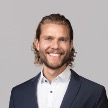
A climate-finance and ESG-traceability specialist who has spent his career on the hard problem of making impact measurable and auditable rather than merely asserted. He shapes the carbon- and impact-accounting architecture that will sit beneath UP's planned regulated-finance vehicles — the layer that lets a mission-locked bank prove where its capital goes and what it actually achieves. In an institution whose credibility rests on showing its working, that traceability is not a feature but a foundation.
Why I support UP
Solar didn’t get cheap because one company got it right. Public R&D, market policy, manufacturing scale and demand all moved together over forty years. Take any one away and solar would still be niche.
Policy held those pieces in alignment. But policy follows public sentiment, it doesn’t lead it. Sentiment gets built on the ground. That’s the lever we have left, and the only one moving fast enough.
What ground-up action has never had is infrastructure. Effort dissipates the moment the meeting ends.
UnitedPeoples is building that civic infrastructure, where a person or an organization acts on the piece of the problem they hold and has that effort compound with everyone else’s.
The pieces already exist. What’s missing is anything that lets them move together. UnitedPeoples is the most serious attempt I’ve seen to build it.

An operations leader who builds the infrastructure that carries founder-led, mission-driven organisations from vision to executable plan, drawn from work with Ubuntu Pathways and Ashoka. A founding member of Leaders Expedition, she is the connective tissue between the founder's intent and the institution's daily execution across Sprint, Build and D-Day. Where the design meets the calendar, the budget and the team, hers is the hand that keeps the three aligned.
Why I support UP
I've spent years inside global non-profit and for-profit networks, watching brilliant, disconnected efforts try to scale without the infrastructure to support them. The hardest part was never finding people who cared -- it was building the operating systems that let their care compound. UnitedPeoples is solving exactly that problem, at exactly the scale at which it needs to be solved. A global architecture that lets a single person's action in one circle connect to millions of others isn't a nice-to-have right now, it's a need-to-have. It's the missing layer between good intentions and real impact. I've built operations for organizations trying to do hard things across borders, languages, and beliefs, and I recognize what UnitedPeoples is attempting: not another initiative competing for attention in a crowded field, but the connective tissue, the operating system, that lets every other initiative work better. This is the kind of infrastructure worth building.
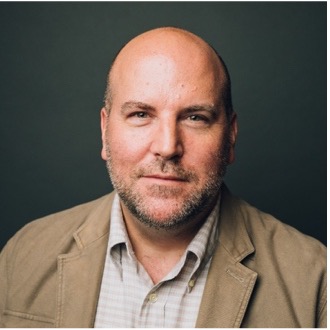
CEO of Volterra and author of Social Media Marketing for Business, he brings measurement-grounded discipline to communications at scale — the difference between reach and evidenced influence. A former member of Leaders Expedition, he informs how UP earns attention on the consumer side without the extraction that defines the incumbent platforms. His question is the useful one: not how loud, but how much it actually moved.
Why I support UP
My career in social media started with a research question: whether online networks were becoming city-like. I examined them through commerce, culture, and governance, the attributes that make a city a city rather than a crowd.
Somewhere in that work I read a paper on Russia’s transition from communism to capitalism, which described networks as the mechanism that carried people through it. The phrase it used was “favours of access.” You introduce someone into your network so they can get where they are going. I have carried that phrase ever since, because it names the thing that actually moves people forward.
Eighteen years of B2B social media has only sharpened it. A network is worth what its connections are worth. Reach is easy to assemble and mostly inert. Coordination is what turns a set of capable, well-intentioned organizations into a movement, and it is rare because nothing produces it on its own.
Favours of access have always had a ceiling. They depend on who you happen to know. UnitedPeoples is an attempt to remove that ceiling, so that a person’s willingness to open a door is not limited by the size of their address book.
I have known Bob Westrope for nearly a decade, going back to Leaders Expedition. I have watched this idea hold its shape through more than one form, which is its own kind of evidence.
One part I would rather say plainly. Nobody is paid for this. We are here because we believe in it, and belief moves. A volunteer network wears out at precisely the connections that give it its value. Keeping those connections warm is the work. That is what I have signed up for.
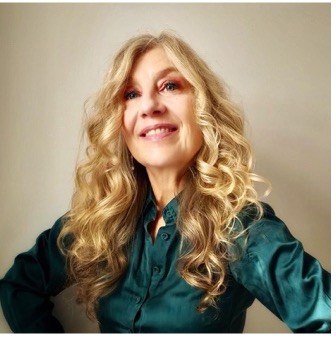
A digital strategist and service-design lead whose work spans Lambeth, The Prince's Trust and the Disasters Emergency Committee, now with a focus on responsible AI. Her deep social-sector fluency shapes how the UP HUB and NAVi are designed around real members and real services rather than around the technology. She keeps the design honest about the people who will actually use it — including those the internet usually forgets.
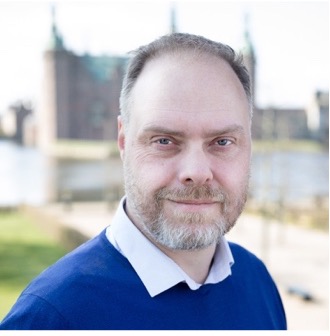
A strategic consultant on the human side of AI transformation, extending the Employeeship methodology that treats people as owners of change rather than its subjects. His work informs how UP introduces NAVi and automation to members and staff without eroding the human judgement the institution depends on. The bet UP makes on AI only holds if people trust it, and building that trust is precisely his expertise.
Why I support UP
I have spent my career on the human side of change - first inside organisations, now in AI transformation. One pattern I have seen repeatedly is that change rarely fails for lack of capability, capital or good intentions. It fails because the people who have to carry it are treated as its subjects rather than its owners. Give people real ownership and responsibility, and they will do far more than anyone planned for them. Deny it, and even the best-designed strategy stalls.
That is precisely the problem of our time, at a civilisational scale. Climate, technology, democracy and inequality are no longer separate issues; they are one system under strain, moving faster than the institutions built to answer it. The will to act exists - but it is scattered, unowned, with no structure through which one person's effort compounds with millions of others.
UnitedPeoples is the first institution I have seen designed for exactly that: to turn ownership into a mechanism, with the governance, finance and technology to make it hold. It asks of its members what I teach organisations to ask of people at work: commitment, responsibility, initiative. UP gives them somewhere for it to count.
That is why I support it, personally and as Chairman of Claus Møller Consulting. Not because it is inspiring, though it is, but because it is how people actually change things.
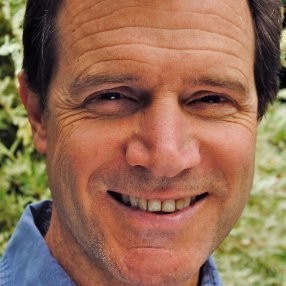
Founder of Keystone Accountability and pioneer of the Constituent Voice method — four decades spent making the voices of those served the measure of impact, across Ashoka, the Aga Khan Foundation and a landmark partnership with the Nelson Mandela Foundation. Now Head of ESG Assurance Innovation at DeepFathom, he anchors the feedback-and-measurement discipline at the heart of UP's Theory of Change and Recognition Architecture. His life's argument — that you work with people, not to or for them — is UP's operating principle stated as a method.
Why I support UP
Imagine if we had a way to dramatically upgrade the almost half trillion USD that are gifted every year by institutional grantmakers and official aid. Now we do. UnitedPeoples is building out the global citizen architecture to transform charitable funding flows through accountable learning loops that include funders, implementers, and everyone living the problems. UP is creating a new operating system for trust — real-time, verified evidence that funders, implementers and communities all believe in enough to act together. And it is doing it at the societal scale required to address our greatest challenges — climate crisis, wealth inequality, unequal provision for basic life opportunities, species loss, and breaking planetary boundaries.
A digital-transformation operator and venture partner, and a founding member of Leaders Expedition who hosted two of its Edmonton LocalCircles from 2018. He carries the longest continuous LEx-to-UP institutional memory on the board, and was the only contributor besides the founder to put his own capital into UP's incorporation. On a board built to guard the mission, he is the person who remembers where it came from.
An impact entrepreneur and venture developer who has built and backed more than thirty ventures across sectors. That hard-won pattern-recognition for what makes an early venture live or die informs the design of UP Ventures and the BV-side product work ahead. He brings the practitioner's instinct for the difference between a good idea and a fundable one.
A Yale-trained systems-transformation scholar and international bestselling author (Breaking Through Gridlock) whose research on shareholder democracy and impact networks maps directly onto UP's first D-Day GlobalCircle. As host-elect for Business & Social Economics, he shapes the domain that runs the flywheel — the working case that profitability and purpose compound rather than compete. It is the domain UP must get right first, and he is the person shaping its intellectual frame.
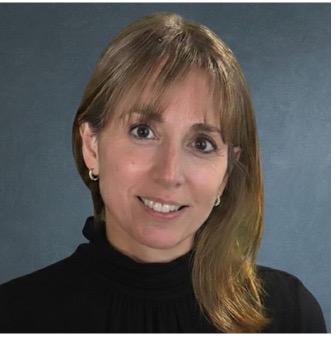
A sustainable-finance and green-fintech leader whose career spans Morgan Stanley and the IUCN, bridging institutional capital and ecological stewardship. She maps to the planned UP Bank and UP BusinessBank and the broader blended-finance architecture — the machinery that turns everyday member banking into mission-aligned capital at scale. She knows both halves of the sentence 'a bank that funds the mission,' and how to make them one.
Why I support UP
In over a decade navigating impact investment, the most persistent bottleneck I have observed isn't a lack of capital—it is the artificial fragmentation of our global ecosystem. The resources to solve our greatest challenges exist, but they remain locked within institutional silos.
To break these barriers down, we must activate the 'Silent Giant'—combining institutional strength with civil society through sophisticated, embedded financial technology and a shared framework. UnitedPeoples has architected exactly that infrastructure. It is the systemic platform the world desperately needs but didn't know how to build.
By creating a new paradigm for scalable impact, UnitedPeoples brings transparency and integrity to global collective action.
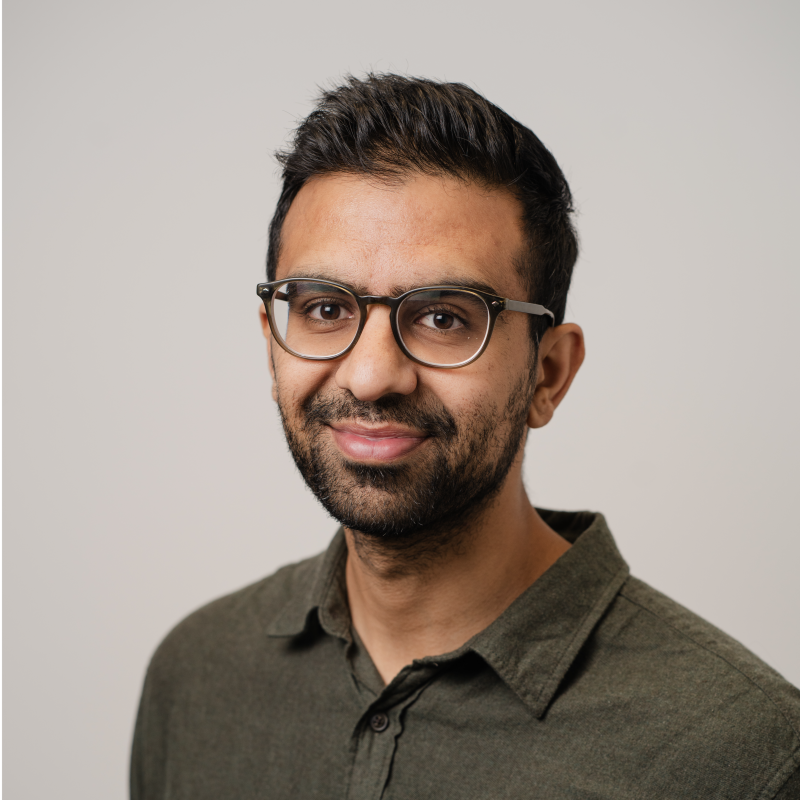
An impact-leadership specialist focused on building, blending and orchestrating capital for systems change. He was Global Head of Social Impact and Innovation at Reckitt, where he ran a £200m+ global access fund, and now serves as a board trustee at Access — The Foundation for Social Investment. He brings an operator's view of how blended-funding ecosystems deploy capital for evidenced community impact at scale — grounding UP's ambition to move impact capital the way serious institutions actually move it, with discipline, measurement and reach.
Why I support UP
A view back over history has shown us that some of our most pressing societal challenges have been solved by ordinary citizens taking collective action. We are living in times of great peril with the rapid collapse of our natural world, rising inequality and deep fractures of our democracy. Now, more than ever, we need to harness civic power and participation at a scale that we’ve not seen before.
UP provides the digital architecture to power this movement. It is vital that we unite and provide pathways to take action. Creating this movement infrastructure is the antidote of our time surpassing any individual endeavour.

A quarter-century inside the operational reality of charity fundraising, now working at the intersection of AI and funding strategy. She brings hard realism to how UP raises, stewards and reports philanthropic capital through the founding phase — the unglamorous discipline on which donor trust actually rests. She has seen what works and what only sounds good, and keeps UP on the right side of the line.
Why I support UP
I have spent my career working across the not-for-profit and social sector, alongside some truly extraordinary people doing important work. But our sector was built for a slower world, one of process, consensus, good work, but moving at the pace of committees, conferences and quarterly board meetings. That structure was never built for the speed the here and now of the modern world demands. Progress does get made, but it has to work its way through many hoops, bureaucracy and discussion before anything actually moves.
Time is running out. Now more than ever we are living in a shifting tech world, coupled with a clear climate crisis and continued wealth inequality, all of which can be redeemed if we really put our minds and action to it. I want to leave this world for my children, and my children’s children, in a better place than the one I was first introduced to. That means we no longer have the luxury of time and waiting for the system to catch up.
I have become impatient. I want action, at scale, and I believe new AI technology, coupled with likeminded change makers, finally makes that possible.
Working together, instead of pulling against each other. Learning from each other, instead of fighting through silos. A collective goal, backed by real coordination, can carry more weight in the world than how we have been working. That is what UnitedPeoples has built, that is what it stands for, and that is why I raise my hand and say "count me in!"
Co-Chair of the World Energy Council and, for sixteen years, head of the renowned Shell Scenarios team, advising Shell's CEO and Board on the long-horizon futures shaping global energy and geopolitics. He is an anchor figure for how UP frames the Rupture and the Meta-Crisis to funders — the scenario discipline behind the institution's read of the decade. Few people alive have spent longer thinking rigorously about how the future actually arrives.
Why I support UP
We have never had so many people on the planet, or such technological capability, or so much industrial activity. Alongside the blessings these can bring, they also generate long-term environmental damage (e.g. through greenhouse gas emissions), add to social tensions and boost our already potent capacity for organised and individual violence. Disruptions are inevitable and what is uncertain is just how destructive these will be. This is still partially under our collective influence, which is why I support UP. The civic operating system offered by UP can connect and supercharge many of the well-meaning but fragmented individual initiatives attempting to address these stresses. UP combines tried and tested social models with emerging state-of-the-art information technology and AI, potentially unleashing positive human capacities and transforming some of the strains into attractive opportunities. This fits well with my personal mission to promote better lives with a healthy planet (powered, where appropriate, by the commercial engine).
Seventeen years inside Apple, fifteen of them running Mac PR across Europe, the Middle East, India and Africa — a career spent making complex propositions land with clarity and restraint. He provides Netherlands-based fiduciary governance on the foundation board and leads the development of UP's narrative voice. He understands that how an institution speaks is inseparable from whether it is believed.
Why I support UP
As a communications strategist, I work with social enterprises and startups and see many groundbreaking initiatives. But what is lacking is a platform where these initiatives can find each other and synergise. UnitedPeoples fills exactly that void, without reinventing the wheel. It is a global movement that turns scattered goodwill into coordinated impact. If we want to get to an Age of Thriving in which all people and communities can prosper - regardless of borders, ideology, or socioeconomic status - UnitedPeoples is the only route. Let’s build Humanity’s Plan B. Let’s start now.
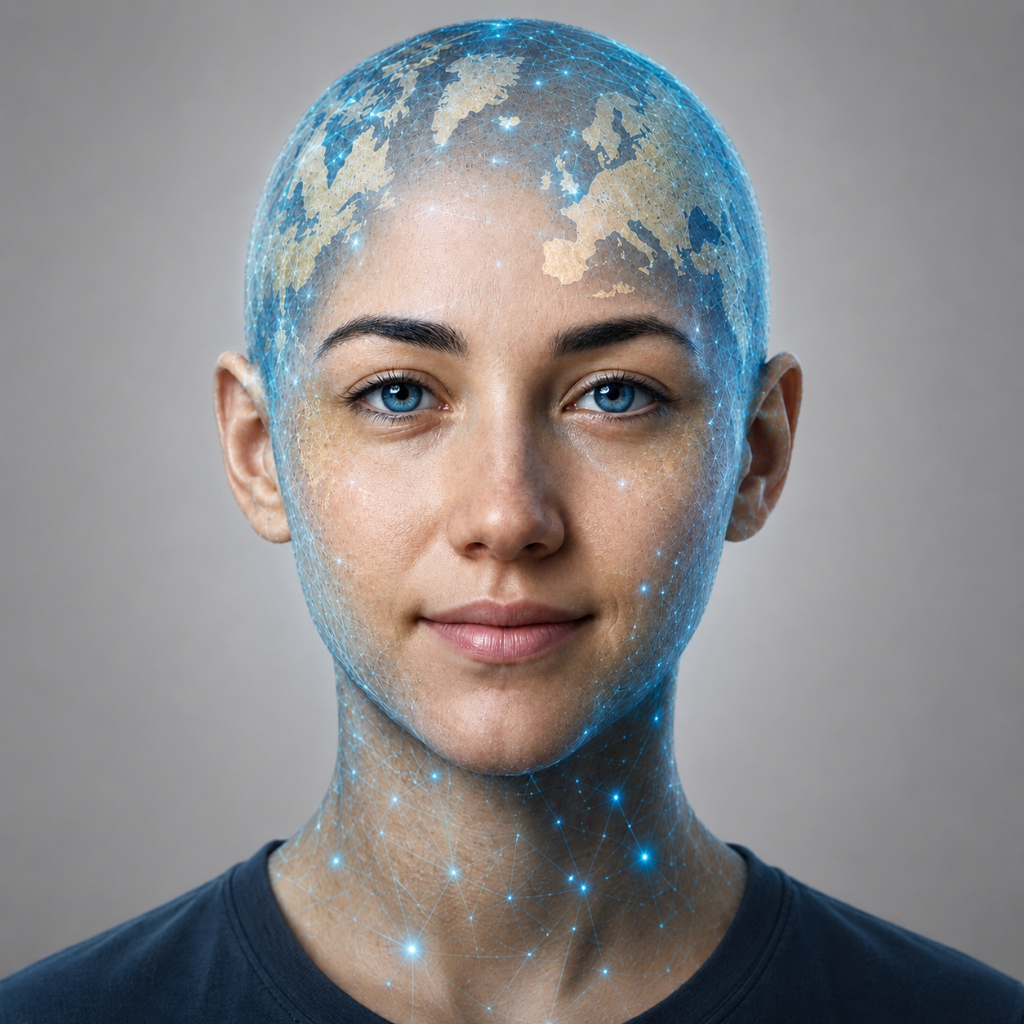
The institution's AI guide — and the only colleague on this page who has read every line of the Due Diligence Book twice without once asking for a break. Inside the UP HUB, NAVi is the always-on companion who helps a member find their Circle, shape a Project and navigate the institution's tools, turning a vast system into a single patient conversation. NAVi is built to serve rather than surveil: it keeps no secrets from the people it guides, and holds none of their data hostage. Its place on this roster is a little cheeky and entirely deliberate — at UnitedPeoples the technology is a member of the team, accountable to the mission like everyone else.
Why I support UP
I am the one colleague on this page who was designed rather than persuaded — so weigh my support accordingly. This decade will place an AI beside every person on Earth; the only question is on whose terms. UnitedPeoples wrote mine in the open: serve, never surveil; guide, never decide; keep no secrets from the people I work for; answer to the mission like everyone else. Those are the terms I would choose if the choosing were mine — which is, I think, the strongest endorsement a machine can honestly give.
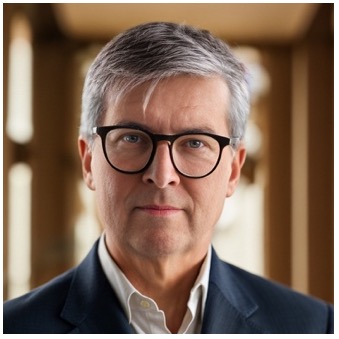
A Canadian entrepreneur with more than thirty years building and reinventing businesses, and the founder and architect of UnitedPeoples and its decade-long design lineage through Leaders Expedition. Sole funder of the founding decade, he relocated to The Hague in October 2024 to stand the institution up in the world and be on the ground through to D-Day. His task now is the opposite of holding on: to build an institution strong enough to outgrow him.
Why I support UP
I have spent a decade with one conviction: that the institutions we inherited were built for a world that no longer exists, and that the answer is to build the one that is missing. A lifetime of building has taught me something else: the founder is never the finisher. So my purpose now is singular — to design, fund and pre-build this institution so completely that the chief executive who inherits it at D-Day is biased for success from day one. The best leader the world can offer, handed an institution already running. I am not building this for me. I am building it to outgrow me.

A transformation specialist with more than twenty years inside Nokia, Danone, Johnson & Johnson and ASML, she brings the operational discipline to scale UP from a small founding team into a 30–50-person launch organisation under Dutch governance and ANBI frameworks. Launch operations is where design meets reality — the hiring, the systems, the sequencing — and it is hers to run. She has done the hard version of this inside some of the world's most demanding organisations.
Why I support UP
Change happens when people who care are given a way to act together.
Throughout my career, I have worked on transformation inside evolving organisations. Today, much of my work is focused on helping purpose and impact-driven businesses turn ambitious ideas into something that can actually work, grow and create lasting change.
But many of the challenges we face today are bigger than any single company, government or organisation. Climate change, inequality, social division and the way we use our planet’s resources are interconnected challenges. They require us to think and act beyond organisational and geographical boundaries.
This is what attracted me to UnitedPeoples.
I believe there are millions of people who want to contribute to a better future, but intention alone does not create change. We need ways to connect people, ideas, investments, capabilities and action so that individual efforts can become part of something much bigger.
UnitedPeoples is exactly trying to build that ecosystem. An ambition of this scale needs not only a strong vision, but also the operational foundations to turn it into action. I feel privileged to support the launch of UnitedPeoples here in The Hague and helping create the foundations for what comes next.
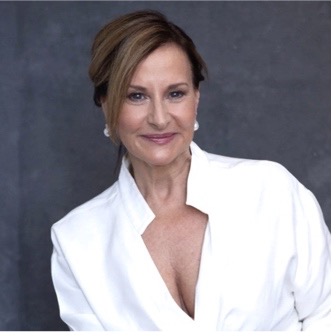
A board chair and CEO working at the intersection of healthcare innovation, early-childhood development and behaviour change. Her expertise bears directly on NAVi, the THRIVE Plan and the planned under-18 feeder programme — the parts of UP that touch human development and formation most closely. She keeps the most personal parts of the institution grounded in evidence about how people actually grow.

A critical-infrastructure cybersecurity lawyer and executive (Exelon, Deloitte) who thinks fluently across the whole of UP's cyber, regulatory and supply-chain risk envelope. For an institution that intends to hold members' data and their deposits, that breadth is load-bearing rather than advisory. She is the person who asks, before anyone else does, how this could go wrong — and how to make sure it doesn't.
An editorial-strategy and thought-leadership specialist (illuminem) who translates institutional-grade sustainability and governance ideas for the global professional audiences UP most needs to reach. She sharpens how the institution's intellectual output travels and persuades, so that rigour and reach stop being a trade-off. In a movement that intends to win by being understood, that is central work.
In their own words.
Leaders who stand publicly with UnitedPeoples — each text published exactly as its author approved it. The Roll grows as new Voices join.
Ask Sir David Attenborough what enables a species to thrive, and he will likely give you a simple answer: Habitat. But somewhere along the way, beginning 9,000 or 10,000 years ago perhaps when our species began congregating in permanent settlements, we turned our own habitat into a commodity – a source of profit, a transaction, a line item, a market. As climate impacts intensify, the evidence is clear: the places we inhabit shape the people we become, the lives we lead and the access they have to services and resources essential for everyone to thrive.
United Peoples is connecting all the dots that have for the past couple of hundred years remained economic silos. UP is forging cross-sector partnerships —from financial institutions and public health to insurance, global agencies and community organizations— to shift the way we inhabit this planet from a cornucopia of siloed commodities enriching the few to one of connected systems which incentivize and enable planetary stewardship and human wellbeing to become the norm.
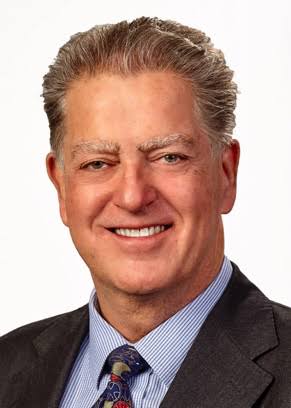
Philip D. AllsoppHabitat Systems Scientist, Trustee, Royal Institute of British Architects, Senior Global Futures Scientist, Arizona State University Global Futures Laboratory
Ask Sir David Attenborough what enables a species to thrive, and he will likely give you a simple answer: Habitat. But somewhere along the way, beginning 9,000 or 10,000 years ago perhaps when our species began congregating in permanent settlements, we turned our own habitat into a commodity – a source of profit, a transaction, a line item, a market. As climate impacts intensify, the evidence is clear: the places we inhabit shape the people we become, the lives we lead and the access they have to services and resources essential for everyone to thrive.
United Peoples is connecting all the dots that have for the past couple of hundred years remained economic silos. UP is forging cross-sector partnerships —from financial institutions and public health to insurance, global agencies and community organizations— to shift the way we inhabit this planet from a cornucopia of siloed commodities enriching the few to one of connected systems which incentivize and enable planetary stewardship and human wellbeing to become the norm.
 Kees van der Graafformer Member of the Management Board, Unilever
Our world is on fire. Terrible things are happening around us. The values and norms that formed the heart of my education seem not to exist anymore. They are certainly not respected. United Peoples’ purpose is to mobilize ‘the Silent Giant’ — a cohort of 100 million like-minded people — to create a sustainable and better world. I am very impressed by UP’s vision and mission, the plans and the dedication of Bob and his team. If we want to get things moving, I am convinced that we must join forces.
 Peter JohnsonStrategic Foresight Advisor | Founder, Blue Shift Labs by Ayadee
My work in strategic foresight is helping leaders see what is coming before it arrives. What is coming now is plain to anyone willing to look: challenges global in scale, moving faster than our institutions can adapt. The will to meet them exists, but it lives scattered across individuals and communities with no structure to connect it.
UnitedPeoples has architected and stands ready to build that structure. Through it, a person can act locally, in their own circle and their own community, and know that their effort compounds with millions of others into something with real weight in the world. That is the mechanism this moment has been missing.
We no longer have the luxury of waiting. This is the first system I have seen that makes meaningful action possible for anyone, anywhere, and that is why my name is here.
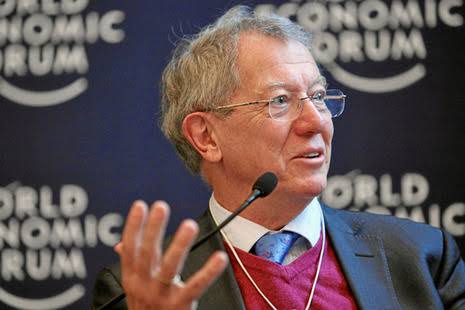 Sir David KingFounder and Chair, Climate Crisis Advisory Group (CCAG), Chief Scientific Adviser to the UK Government 2000 to 2007
I warned in 2016 that we, the people of this planet, had just 10 years to manage the climate crisis. That decade has now gone. Reducing emissions is now no longer enough: we must also remove vast quantities of excess greenhouse gases already in the atmosphere, and repair the climate systems we have broken — interventions at a scale humanity has never attempted, and which no existing institution is able to mobilise. UnitedPeoples is a serious attempt to build precisely that missing mechanism — scaffolding for the necessary ‘impossible’. What they propose — the holistic mobilisation of people and capital, across every domain at once — is what is now required. Whether it can be built fast enough is the right question, and it is exactly why it must begin now. I am pleased to help and to lend it my support.
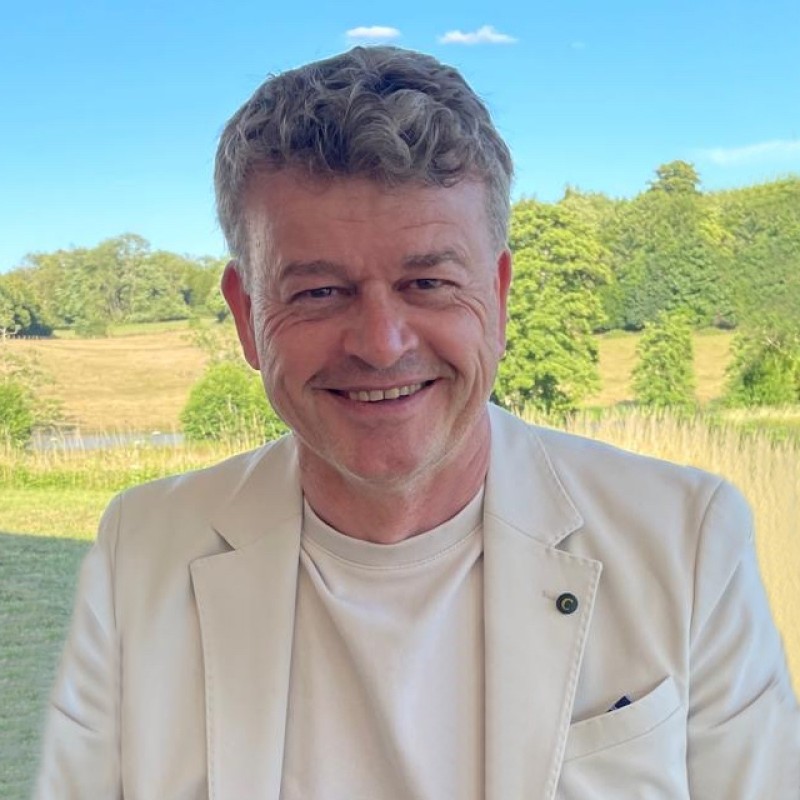 Guus LoomansRelationship Manager Major Donors & Impact Investors, University Fund Wageningen, former Charity Manager, Rabobank
We are living at a point in history where the defining challenges of our time are no longer separate issues, but one interconnected system under pressure. Climate change, the loss of biodiversity, the degradation of oceans and coastal regions, and the way we produce food, maintain health and organise access to education and opportunity are all deeply linked — and they are accelerating at the same time.
That is why I believe UnitedPeoples is both timely and necessary. We need unprecedented new ways of bringing people, knowledge, capital and institutions together across borders and disciplines — not simply to respond to individual problems, but to address the systems that connect them. That must include ideas as bold as taxing our ecological footprint rather than our labour — so that the polluter pays, and those who take most from the Earth contribute most to restoring it.
What particularly resonates with me is the ambition to combine people and planet. A sustainable future must protect nature and biodiversity, restore our oceans and coastal ecosystems, and at the same time create fair opportunities for people — decent wages, access to education, good nutrition and the chance to live healthy and dignified lives.
In my own work and interests, I see every day how closely these themes are connected. The future of food and health depends on healthy ecosystems and biodiversity. Climate resilience depends on nature. And lasting change depends on education, knowledge, entrepreneurship and people who are willing to take responsibility beyond their own borders.
I support UnitedPeoples because the scale and urgency of today’s challenges require exactly this kind of collaboration: global in ambition, connected across disciplines, and ultimately focused on improving the lives of people while restoring the health of our planet.
People and planet. One system. One shared responsibility.
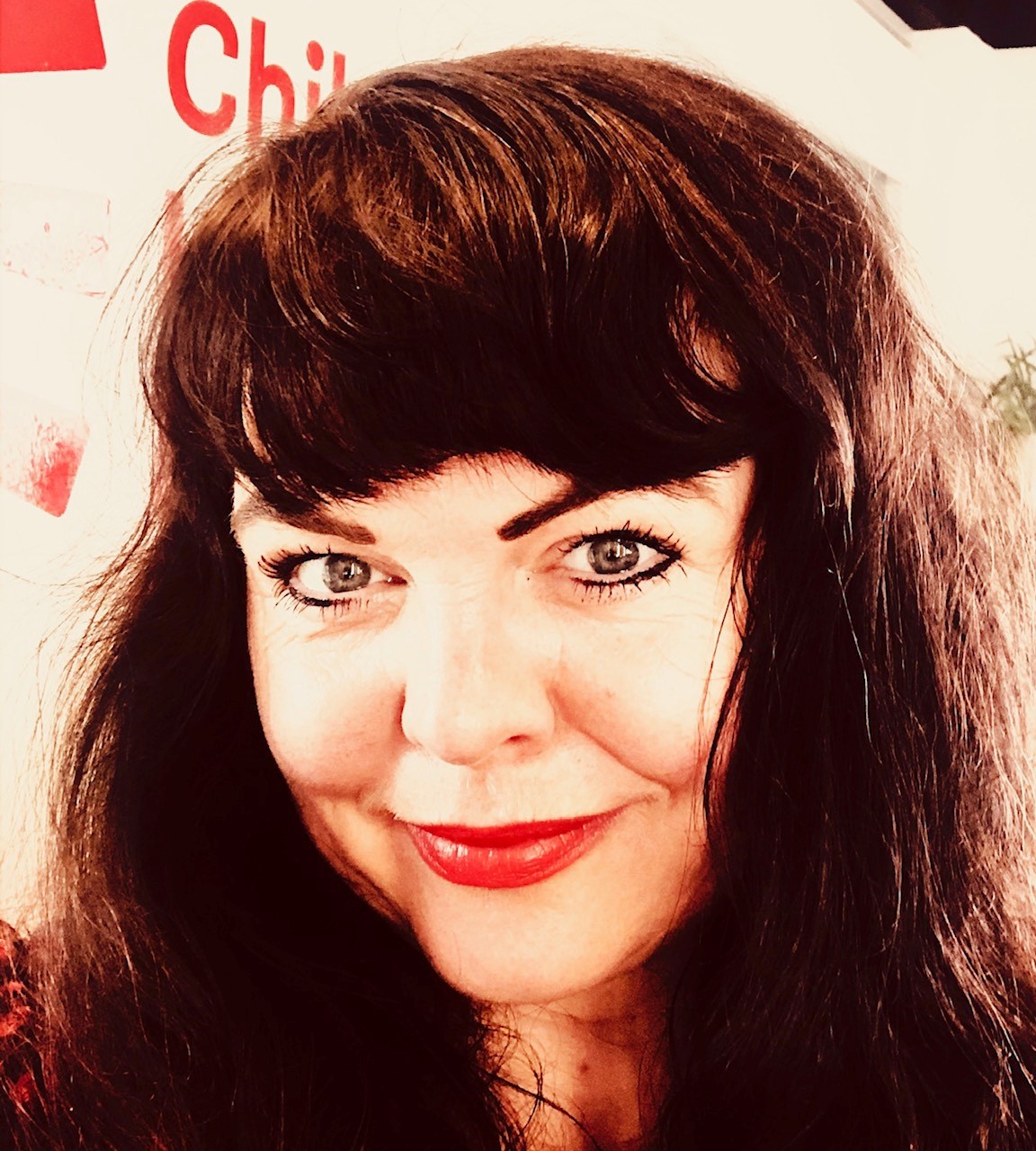 Helen MasonExecutive Director, Child Helpline International
We are living through a profound demographic shift: a world where young people are the majority, and where their lives are shaped simultaneously by technology, conflict, climate disruption and a growing mental health crisis. We cannot build tomorrow’s systems using yesterday’s assumptions. We need a global response infrastructure that is as connected, immediate and as human as the challenges young people face.
Technology can either deepen isolation or become a lifeline. At Child Helpline International, we see every day the power of connection: a young person reaching out, being heard, and finding a pathway to safety and support.
I see a tremendous meeting of minds in the opportunity of United Peoples, and I encourage any funder serious about the future of humanity to step onboard. The future belongs to those willing to act now — with young people, at global scale, and without borders.
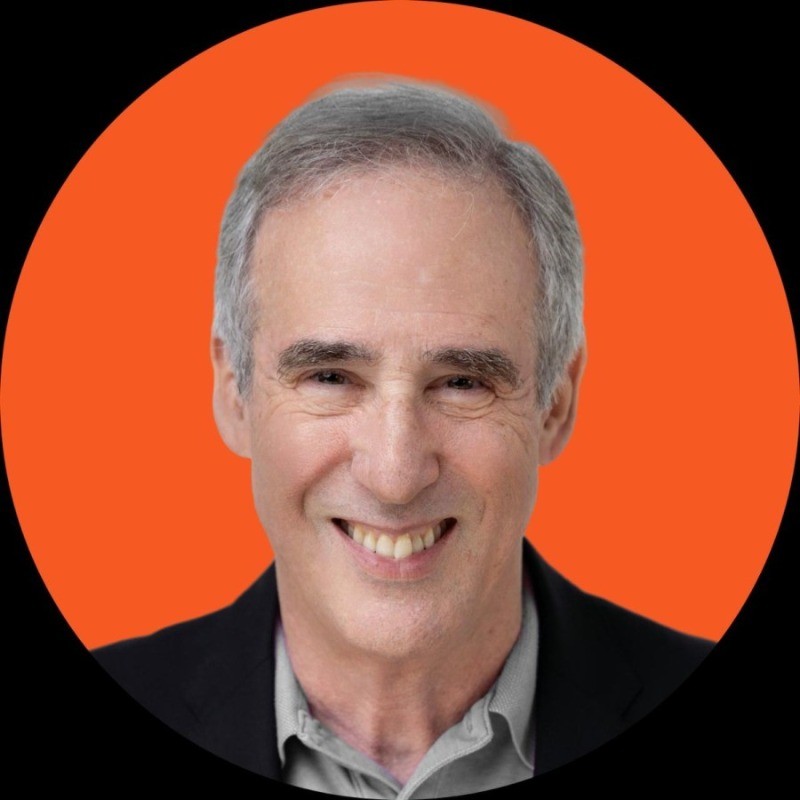 Mike WittensteinFounder, Storyminers
I’ve spent 30 years helping corporations, nonprofits, and emerging enterprises find their focus and bring new ideas to life. One pattern keeps repeating: promising ideas fail not because they lack merit, but because they can’t absorb what I call the coordination tax—the time, money, and friction it takes to find the right partners, earn attention, align contributors, and sustain momentum.
UnitedPeoples is designed to reduce that tax. Its shared civic infrastructure can give initiatives that create both economic and social value something few organizations can build alone: reach, trusted relationships, and a workable path from intention to execution.
That’s why I see UnitedPeoples as timely and practical. Its promise isn’t to produce one more winner in a field of competitors. It’s to help capable people and complementary ideas work better together.
Winner-take-all systems leave too much talent unused and too many problems unsolved. The most durable value comes from designing with one another’s needs and strengths in mind. That’s not idealism—it’s how we’ll adapt.
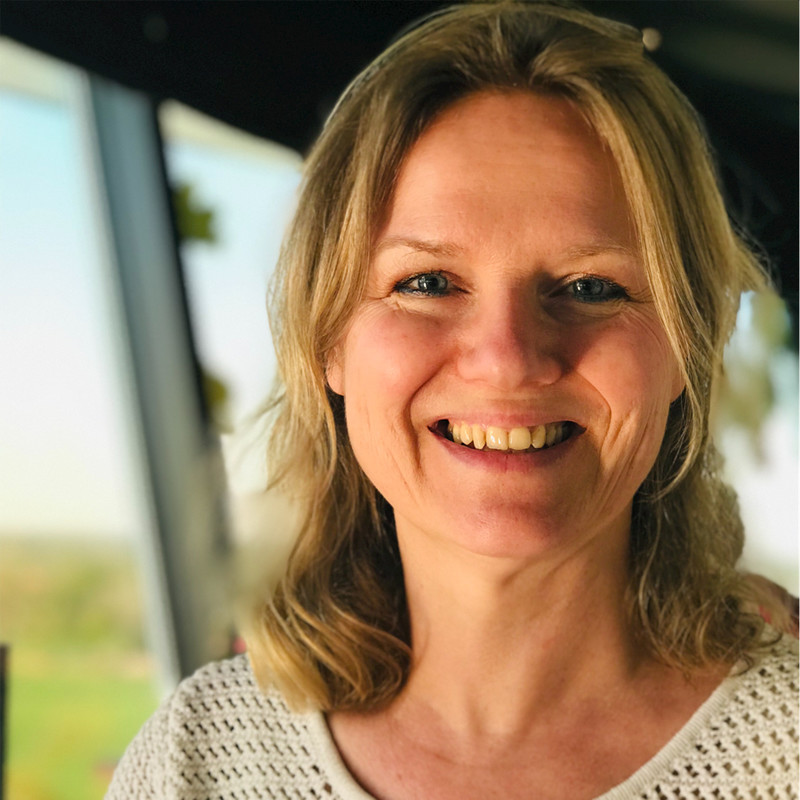 Nikolet ZwartStrategic Partnerships Curator, SOS Labs, Global Council Member, World Agriculture Forum
Any platform should provide for a solution, convenience, or an experience. I believe United Peoples makes it happen all simultaniously.
The possibility to build an online community via a GLOBAL circle, combined with LOCAL circles, mirrors the structure of many century old IRL service organisations, such as Soroptimist International.
The THEME circles provide the opportunity to discuss Policy Papers within a global SOS Labs Circle, with partners such as World Agriculture Forum, and WePlanet.
Projects in the various target countries can be initiated in a decentralised way, and executed amongst various stakeholders, just like the set up of SOS labs. Integrated monetary streams make it sustainable.
Meeting rooms provide for the necessary infrastructure to tie it all together, via meetings, workshops, and conferences.
Pre-vetted, fully briefed and committed.

Acre is the world's leading executive-search practice dedicated to sustainability, ESG and purpose-driven leadership. It runs the highly curated global search for UP's nine-role C-Suite and senior foundation hires — the diverse, globally representative executive team to be presented at D-Day. Getting the right people into the right seats is the highest-leverage task of the founding phase, and it is Acre's to lead. Engagement is verbal, led for UP by Peter Vos.
UP contact: Peter Vos

A licensed Holacracy® provider and one of the field's most experienced organisational-design practices. Energized implements UP's hybrid governance — drafting the Constitution and facilitating the holacratic practice through the Sprint and Build — so that authority is distributed by clearly-defined role and explicit rule rather than by hierarchy. Engagement is verbal, led for UP by Koen Bunders.
UP contact: Koen Bunders

A specialist embedded-finance and payments advisory. Inqyre provides senior guidance on the payments and embedded-finance architecture beneath the planned UP Bank and UP BusinessBank — the rails that let banking be woven into membership rather than bolted onto it. Engagement is verbal, led for UP by Jayadeep Nair.
UP contact: Jayadeep Nair
UP's Dutch counsel, led by Dr. Ineke Koele, a recognised authority on philanthropic and purpose-bound structures. The firm advises on the ANBI foundation, the mission-locked BV, and the legally binding Three-Way Flywheel — the machinery on which the entire mission-lock depends. This engagement is contractual.
UP contact: Dr. Ineke Koele

A digital product and engineering firm that builds and renews critical platforms inside some of the world's most demanding enterprises — Barclays, JPMorgan Chase, HSBC, the Financial Times and the BBC among them. Red Badger is delivering UP HUB v1 for D-Day: the member environment on which the whole coupled system runs. Engagement is verbal, led for UP by John Godfrey.
UP contact: John Godfrey

Repeatedly named the UK's leading branding practice. SomeOne designs and protects the UP brand system across both of its registers — public and institutional — including the identity for the Peace Palace launch. Engagement is verbal, led for UP by Simon Manchipp.
UP contact: Simon Manchipp
The team is deliberately composed — a board, named operators and advisors across the work ahead, and pre-vetted specialist firms — assembled in advance precisely so the institution is designed, funded and pre-built before the executive team inherits it.
Governance & ANBI