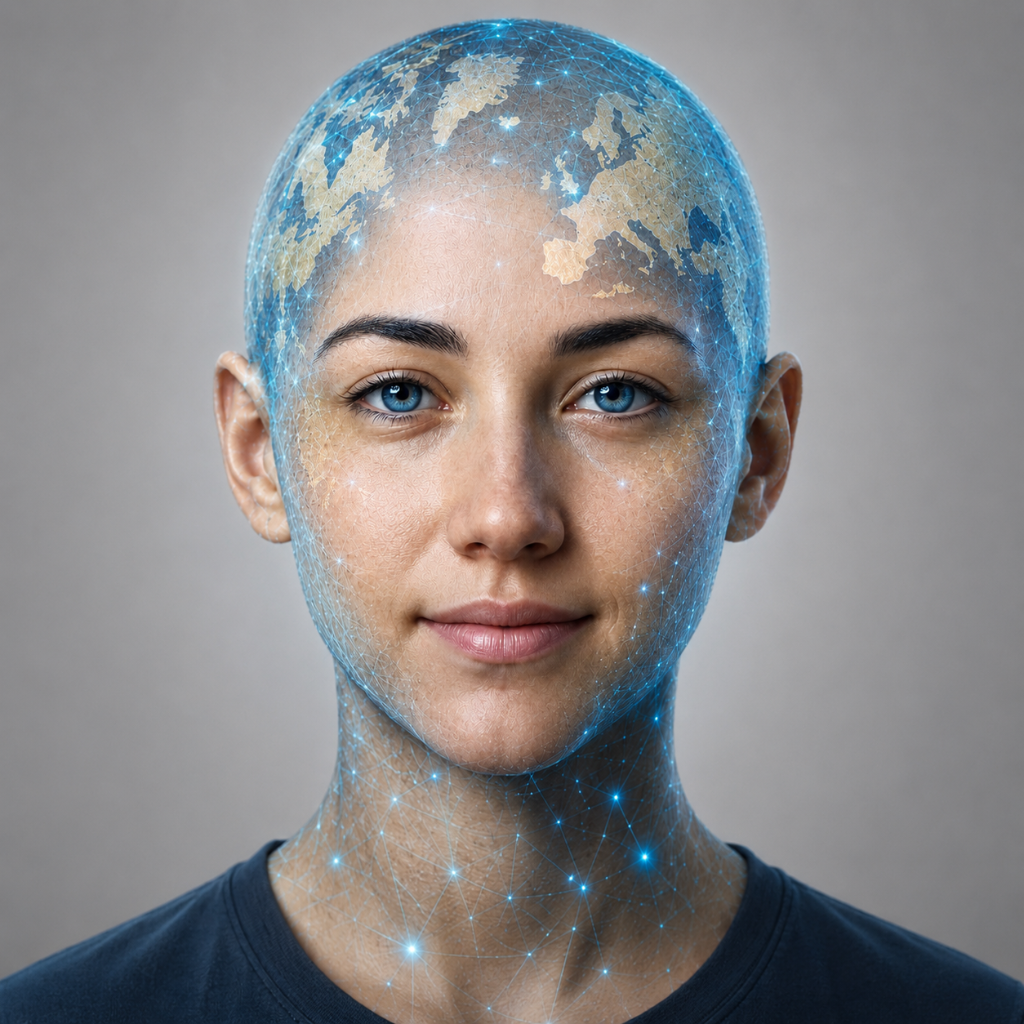
The baby was forty minutes old when the wall lit up. On the pale plaster of a new maternity wing in Seoul, an AI projector gathered the newborn’s biology into a quiet constellation — greens for resilience, ambers for risk, a few tiny reds where clinicians would keep watch. Nurse Ji-eun Cho kept her tone conversational, almost routine.
“With the right supports,” she told the parents, “she won’t just live to a hundred. She’ll spend those years well.” By 2035 the century mark is no longer remarkable for children born in places like this. What still feels radical is the promise inside those years — and the ambition to make it ordinary across whole societies, not the preserve of a lucky few with clever machines.
Professor Hye-jin Park, who runs the pilot, waved me into a corridor that smelt of antiseptic and coffee. “Longevity on its own is a routine miracle,” she said. “The measure that matters now is thriving — and whether we can build systems strong enough that most people get there.” Systems, not slogans: that phrasing turns out to be the key to the decade.
The science has outrun our metaphors. AI proposes drug candidates in hours and predicts disease courses before the first mouse is dosed. Multi-omics — reading the body’s full biological data: genes, proteins, gut microbes, metabolism — has moved from journals to clinics. Regenerative scaffolds — frames on which the body regrows its own tissue — and synthetic organs are edging onto the lists of what public health systems will fund. Neural interfaces — direct links between brain and machine — restore speech and movement. Robotics has left the laboratory for operating rooms and homes: surgical platforms that halve complication rates, exoskeletons that return stroke survivors to their streets and jobs, lift-assist machines that spare carers’ backs and, unexpectedly, give them time to talk. The open question is whether all that possibility can be turned into the texture of everyday life.
Inside the UP HUB — the civic operating system that UnitedPeoples (UP) built for this work — the GlobalCircle for Health & Wellness grew into one of the largest communities on the platform by 2035. About forty-five million members subscribe to the Health & Wellness domain, roughly ten per cent of all GlobalCircle memberships across UP. Scale matters because it is how norms travel.
One clinic posting its wait time on the wall is an anomaly. A thousand clinics doing it is a standard.
Map the work behind that number and you find more than a million separate initiatives tagged to Health & Wellness by the end of the decade — around 1,180,000 Projects. About a third were neighbourhood efforts members led themselves: blood-pressure kiosks in city markets, peer-support apps built by teenagers, co-ops running small clinics. Nearly half were institutional collaborations — with universities, employers, ministries and NGOs — where procurement and payment rules were rewritten in public. The rest were gap-fillers: maternal safety nets in poor counties, oral-health programmes in neglected schools, telehealth kiosks where no doctor had served. The point of the figures is that change at this scale starts to feel like weather rather than news.
The engine that makes those numbers useful is a practice. Appreciative Collaborative Exploration — ACE — sounds softer than it is; its operational pulse, DARE, gives it teeth. Teams Discover what already works, Aspire together to a concrete target, Refine the plan — roles, safeguards, money — then Empower people to act and adapt, and the cycle starts again. NAVi, the HUB’s quiet intelligence, does the unglamorous labour: translating across languages and law, matching members to projects, measuring outcomes so Kisumu can learn from Seoul without the usual decade of drift. Health & Wellness didn’t publish new ideas so much as build a habit of iteration and a way to move that habit around. And one blunt claim kept recurring in the work that guided the Circle: the future of health is inseparable from the future of democracy. Where trust erodes, breakthroughs stall. Where people see competent systems working in their lives — in their phones, their wallets, at their clinic doors — trust returns and change speeds up.
What makes the architecture powerful is the connections, not the parts. A kiosk in Dhaka becomes a procurement standard in Nairobi because a LocalCircle tagged it, a ThemedCircle wrote it into a standard, a BrandedCircle carried it through, and another GlobalCircle layered on finance or law. Innovation here is less a lone breakthrough in a lab than the compound effect of Circles feeding one another until the new obvious takes shape.
Beneath the surface sits a nested structure of ThemedCircles, built like Russian dolls to turn big ideas into working practice. At the outer shell are roughly seventy-five broad themes — neurodegeneration, oncology and infectious disease, but also payment reform, climate-health and data governance. Inside those sit hundreds of programme groups that turn direction into method, then thousands of sprint teams that run ninety-day trials in clinics, schools, factories and councils. On the mid-range path Health & Wellness followed, about seventy-five outer themes feed some 697 programme groups, 3,600 sprints, 12,600 narrowly focused circles and, finally, tens of thousands of micro-collaboratives (tiny working teams) — dense but navigable, because NAVi stitches the whole thing together. It is how a memory-clinic model drafted in Seoul turns up as a caregiver-support app in Bihar a season later.
Dr Nisha Rao, who convenes the neurodegenerative-diseases circle, met me at a clinic in Hyderabad where families queued for screening. “We stopped treating memory care as boutique,” she said. “The outer group sets the bar — what good screening and care look like. Inside it, programme teams build the models: community memory clinics, robotics-assisted daily living. Inside those, sprint teams trial cheap diagnostics in villages and caregiver apps with LocalCircles. Each layer holds the next — and there’s always a live project running, or the circle dissolves.” That last rule sounds small until you see what it prevents: committees without consequence.
Institutions anchor the work through BrandedCircles, or BCs. At BC Mayo Clinic in Rochester, Dr Carlos Domingues slid a longevity protocol across a desk that looked ordinary until it wasn’t: multi-site trials by default, equity and access plans filed up front, cost curves and safety signals published on the HUB. “No miracle without the means to deliver it safely, to many,” he said. In Geneva, Claire Fontaine at BC Médecins Sans Frontières showed me epidemic telehealth kits — AI interpreters, rapid diagnostics, robotic peripherals — that let local teams run surges without flying in doctors. “We don’t parachute,” she said. “We leave tools people can keep.” In Eindhoven, engineer Paul de Vries popped open a modular patient monitor in the BC Philips HealthTech lab and swapped a part with a click. “Repairable in an hour with market parts. Procurement across Europe requires it now.” In Nairobi, Dr Samuel Okoro at BC University of Nairobi ran a finger down a bill of materials for a climate-smart clinic — shade, solar, battery backup. “It’s all on the HUB. Counties can copy it tomorrow.” In London, HR director Anna Mensah described how a coalition of employers made menopause support ordinary in factories and call centres. “Absenteeism halved. Dignity is good business.”
The place where you feel the system become ordinary is the street. LocalCircles aren’t sub-units of Health & Wellness; they are separate civic meshes — neighbours, teachers, foremen, clinic managers — whose Projects are always tagged to at least one GlobalCircle, so what they learn flows back into rails others can run on. In Lagos’s Idumota, nurse Amina Yusuf stood at a single intake desk that had replaced four counters and a maze of elbows. “Every number on this wall is a promise,” she told me. “That’s why people wait — they believe we’ll keep it.” At his kiosk in Dhaka’s Old Town, Rahim Khan pricked a customer’s finger, printed a reading and handed over a bag of beans. “If the pressure’s high, they go home with food that helps, not harms.” In Kisumu’s rural west, midwife Esther Atieno unrolled a laminated map of emergency routes. “We don’t lose mothers to the delays that used to be normal.” In a Manchester library, youth worker Hafsa Ali sat with teenagers learning to call panic attacks by their name. “Names make help possible,” she said, and the line stayed with me.
No committee without consequence: every circle keeps at least one project live, or it dissolves.
Report on this long enough and you keep hearing one quiet crisis beneath the rest: human energy. No system can carry a century of life on the backs of exhausted people. That is why UnitedPeoples built the THRIVE Plan into its operating design from the start — a deliberate scaffold to make capacity, not burnout, the baseline.
In practice that meant sabbaticals that were guaranteed and honoured, therapy and childcare vouchers that arrived when they were needed, and peer mentoring across generations — experienced staff teaching how to pace a career, younger colleagues sharing the digital shortcut that shaved an hour off a shift.
“It stopped us talking about ‘resilience’ like it was a vitamin,” said Hafsa Ali, the Manchester youth worker. “We build it into the room.”
In Nairobi, Dr Samuel Okoro called THRIVE “human-energy policy.” “It’s the base load that keeps the lights on,” he said. “Without it, every other promise flickers.”
The documents can read like management theory, but the effect is plain: less burnout, higher retention, fewer safety incidents — capacity as infrastructure. Here THRIVE is the ballast that lets the Age of Thriving carry its weight.
Travel with the Circle long enough and you see the sweep. In Tokyo, Professor Kenji Matsuda at Keio University Hospital steadied the elbow of a patient taking his first free steps in an AI-tuned exoskeleton. “Rehab used to be hours of frustration. Now it feels like progress you can measure.” In São Paulo, Dr Clara Moreira held up a synthetic kidney scaffold — once boutique, now entering public hospitals because financing rails and open licensing exist. “The scaffold isn’t the hard part. It’s the follow-up and the affordability that are baked in.” In Cairo, architect-engineer Youssef Mansour laid a hand on a solar canopy throwing shade across a ward where fans hummed on a day the grid wavered. “We built shade, and kept nurses.” In Bihar, nurse Sita Devi stood by a telehealth kiosk while NAVi translated a paediatrician’s instructions from Patna into local protocol. “The advice is here. Now.”
The anecdotes are compelling, but every sceptic asks the same question: did it add up? In 2033 a consortium of universities and public-health institutes ran the first independent five-year review of the Health & Wellness GlobalCircle, tracking more than 183,000 members and partner institutions across five continents against matched peers outside it.
The differences were striking. Waiting times in participating clinics fell by nearly half. Maternal deaths dropped by a third in regions running the safety-net protocols. High blood pressure and diabetes complications fell by forty per cent where prevention compacts were live. Youth-wellbeing scores improved by about a quarter in districts using stepped care — support that starts light and steps up only as needed. Even carbon footprints shrank: supply chains that priced in a product’s whole life, from manufacture to disposal, cut emissions by around twenty per cent. And, perhaps most telling, trust rose — more than twenty per cent of respondents said they believed the system would be there for them, against five years earlier.
None of this was magic. It was the dull arithmetic of habit scaled: queues posted on walls, consent written plainly, devices designed for repair, sabbaticals honoured. Together, that arithmetic bent outcomes as surely as any blockbuster drug.
The politics underneath is not hidden. The arc of health in the 2030s will be set by the arc of democracy. On one path, polarisation and misinformation hollow out public trust and turn even proven solutions into partisan fodder. On another, citizens see competence in their daily lives — vaccines they trust, cooler wards in heatwaves, time-to-care falling, help for anxiety arriving where they already are — and democracy becomes tangible again. Health, at this scale, stopped being a sector and became civic infrastructure: the way a society shows, rather than merely says, that it means to thrive together.
Treat health as infrastructure and the dividend compounds: longer, better lives on a planet still fit to live on.
At about this point an editor demands the numbers that anchor the claim. Here they are. Forty-five million members tied to Health & Wellness by 2035 — critical mass enough that when better practice emerges, it becomes hard to ignore. More than 1,180,000 Projects tagged to the domain — roughly 354,000 led by neighbours themselves, 531,000 run with institutions, and 295,000 filling gaps no one else would touch — an ecosystem wide enough that the plain good habits of a decent system spread faster than any single ministry could legislate. A tiered engine of ThemedCircles that begins with seventy-five broad themes and cascades, on the midline estimate, through about 697 programme groups, 3,600 sprints, 12,600 narrowly focused circles and into tens of thousands of micro-collaboratives. And, beyond the health domain, a HUB built to mobilise a hundred million citizens and support more than twelve million Projects across all GlobalCircles by 2035 — the scaffolding into which Health & Wellness plugs.
Not every turn was clean. A tele-triage model — remote sorting of who needs care first — kept missing older women with shortness of breath; the equity audit caught it, clinics re-screened, overtime was paid, and human override became mandatory on every algorithm that sorts people. In Dhaka, a digital intake blurred consent for care with consent for research; the backlash was immediate and fair, and the forms were rewritten in plain language with an opt-out at every step. In Los Angeles, a clinic marketed elective cognitive add-ons as a moral duty; regulators banned the coercion and funded access by clinical need. The Circle learned to fail in public and fix in public — a habit that built more legitimacy than any dashboard.
By the end of my reporting the architecture looked less like a diagram than a temperament. The Health & Wellness profile calls the domain the gravitational centre of societal thriving, and once you’ve watched the work that stops sounding like copy. Health is the world’s largest line of expenditure and the most intimate promise a society makes to its people. Treat it as a commodity and you get miracles for the few and a brittle system for everyone else. The choice has been made explicit.
And so we circle back to Seoul. Ten years after the wall traced her future in dots, Mina is a schoolchild with scuffed trainers and a ping-pong paddle she swears is lucky. Her mother, Sun-hee, carries a laminated card the clinic updates at each check-up — the “healthy-years index,” they call it — with notes from their LocalCircle: a food voucher redeemed at the co-op, counselling booked before exams, the librarian’s mobile number. “When she was born,” Sun-hee says, watching her daughter lunge, laugh, miss and try again, “the nurse said one hundred. Now I think a hundred is ordinary. The work is to make the life inside those years feel ordinary too.”
Outside, the morning light catches a poster above the clinic door that’s been there since Mina’s first day: More healthy years, shared more fairly. The phrase has always sounded like justice. In practice it reads more like an engineering spec for a civilisation that means to flourish. Thriving, for all, is the rails you lay — in contracts and canteens, in clinics and factories, in libraries and labs, in the guarantees you keep when the shift is long and the grid runs hot. That a century of life is no longer special is exactly the point. What will be special, and hard, is how many of those years we make good — and how many of us we bring along.